History & Heritage
Buderim Mountain is part of the traditional land of the Gubbi Gubbi people who have inhabited the area for tens of thousands of years.
History of the Foote Sanctuary
The Gubbi Gubbi were peaceful people, traversing and living sustainably from the land. 3,500 Gubbi Gubbi walked where, today, over 500,000 people live.
World history is thousands of years old and made of civilisations such as the Egyptian, Incas, Britons, Chikoan and European which have left behind the Pyramids, Stonehenge and the ancient ruins of Rome and Greece.
Gubbi Gubbi history is many tens of thousands of years old. It precedes all the above and while it does not have the edifices of other civilisations it has much more. An intimate association with the land determines a way of thinking expressed through dance, ceremonies, art and ornaments - a special way of seeing and thinking. Gubbi Gubbi have always practiced sustainability, respect and friendship.
The Gubbi Gubbi share their culture and history as their contribution to Australian history and understanding of our ancient home land.
1839-1840
Andrew Petrie explores Maroochy River and notes the rich timber resource.
1862
Tom Petrie with Aboriginal guides, finds a good resource of Red Cedar on Buderim Mountain.
1863
Timber cutting expands to Buderim and William Pettigrew establishes a store and depot on the Maroochy River.
1869
Surveyor William Fryar surveys Buderim. Joseph Dixon selects first block on Buderim.
1874
Dixon, Caton, Ridley, Coghill and Grigor grow first sugar cane in Buderim.
1907
Joseph Foote purchases 540 acres of Pettigrew’s old selection from Stephen Fountain and establishes a mixed farm producing citrus, coffee, pineapple and pecan nuts.
1916
Eric Joseph Foote fatally wounded at Mouquet Farm on the Western Front
1927
Joseph Foote establishes a dairy, managed by Charles and Emily Booker.
1948
Arnold and Hubert Foote gift 17.5 acres of their land to the Buderim Community Centre for a park to commemorate the loyalty and sacrifice of men of Buderim who lost their lives in World Wars 1 and 2. The park land was surveyed and named the Eric Joseph Foote Park, in memory of their brother who lost his life in World War 1 in France.
1949
Trusteeship of the land is transferred to Maroochy Shire Council from the Community Centre. Under the Deed of Trust, the Council allows a committee elected annually by the public of Buderim “to manage the ground in the public interest, while the Council would not be under any financial responsibility with regard to acquisition, improvement or maintenance.”
1958
Council considers selling the land, but encounters a negative reaction from the Community Centre. Land offered to the Buderim Garden Club to develop, however it was declined because the Garden Club did not have the finances to undertake such a project.
1963
Sub committee formed to guide the development of the “Memorial Park”. First meeting held at Dr Shaw’s residence.
Who was Eric Joseph Foote?
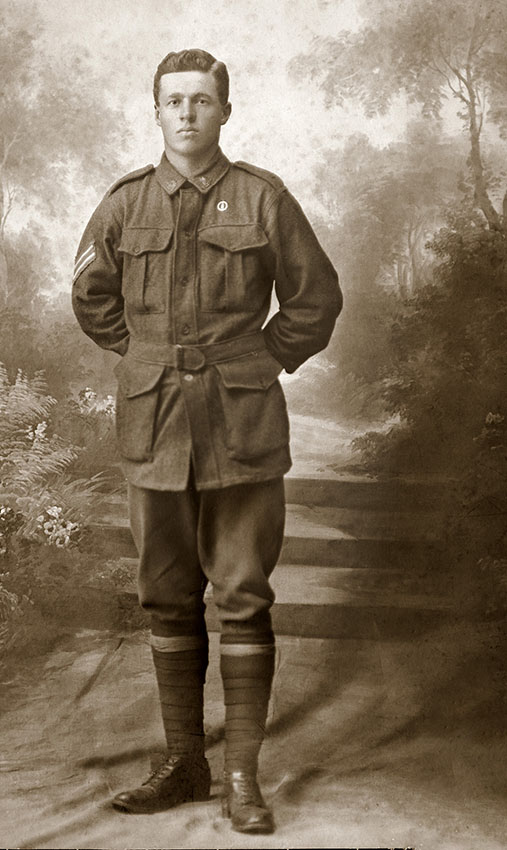
The Quintessential Country Boy Eric Joseph Foote, eldest of six children of Joseph and Violet Foote, was born in Ipswich, Queensland on 1st of January 1891.
The Foote Family in Buderim
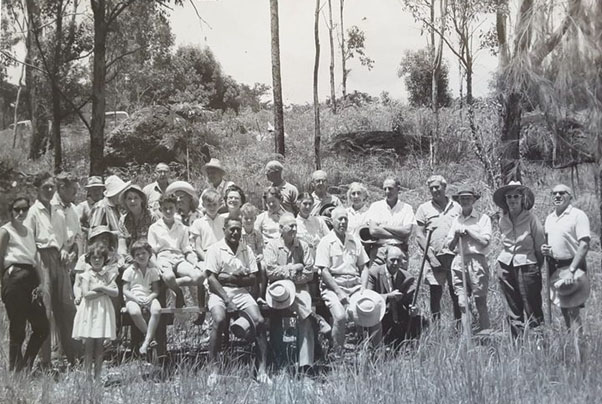
The Foote family were successful retailers who holidayed on the Sunshine Coast before settling in Buderim in 1907. Joseph Foote purchased 220 hectares and established a mixed farm producing citrus, coffee, pineapples, pecans and bananas. In 1908 a natural mutation appeared among their Cavendish bananas. Named the “Mon Mari”, it later became one of Australia’s major banana varieties. The family quickly became active in local life and were soon regarded as pioneers.
Eric Foote: The Young Countryman
Eric, the eldest son, farmed at Woombye, bred horses and won many ribbons at the Brisbane Show. Athletic and adventurous, he was the quintessential Australian country boy. When the First World War began, he enlisted. He sailed with the 9th Battalion in 1915, but illness delayed his deployment. Determined to serve, he accepted a demotion to join the 49th Battalion and reached France in June 1916, entering the brutal conditions of the Western Front.
Service, Sacrifice and Legacy
Eric fought until he was killed at Mouquet Farm in France on 13 September 1916, aged 25. He is buried at Thiepval and was awarded the Military Medal for bravery. Among his belongings was a gum leaf he carried throughout the war, symbolising his love of the Australian bush. In 1945, his brothers Arnold and Hubert donated 17 acres of their land to the people of Buderim in his memory, forming the basis of today’s Foote Sanctuary. The Military Medal, awarded to Eric, recognised bravery in battle and remained in use until 1993.
Early Farmland
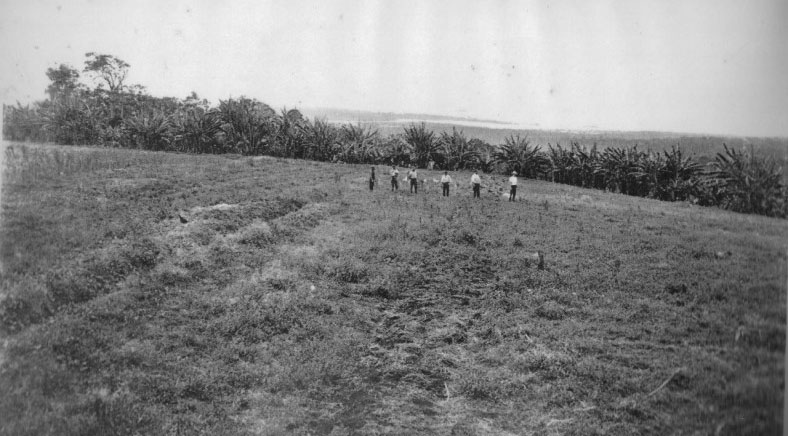
Before the Sanctuary existed, this land formed part of the 540 acres purchased by Joseph Foote. At this time it was still open farmland, soon to become the Foote family’s mixed agricultural property.
Defining The Boundaries
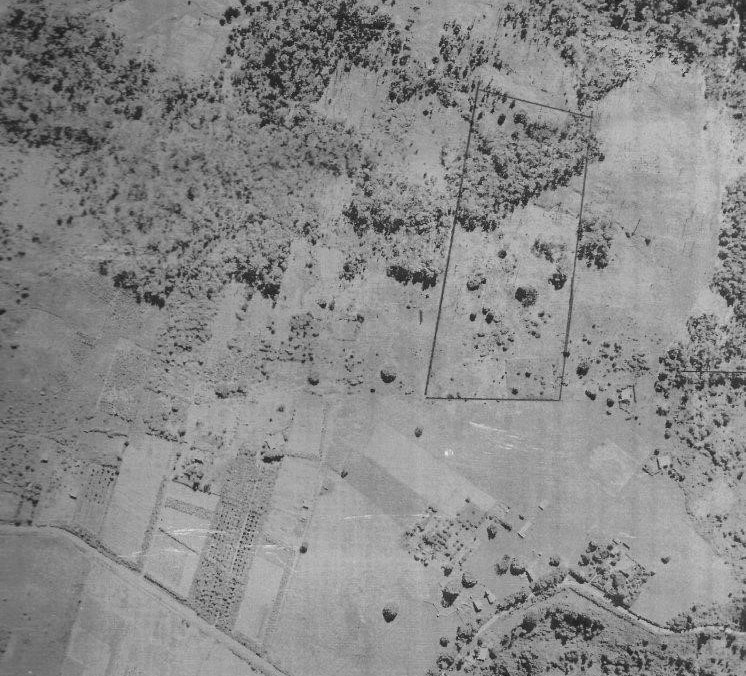
By 1940 the area had been surveyed with its early boundaries marked. The landscape still reflected its agricultural roots, with natural regeneration only beginning to return.
A Community Decision Point
Images from 1958 capture a site in transition. Community groups and Council were debating its future, helping shape the decision to preserve the land rather than redevelop it.
A Restored Rainforest
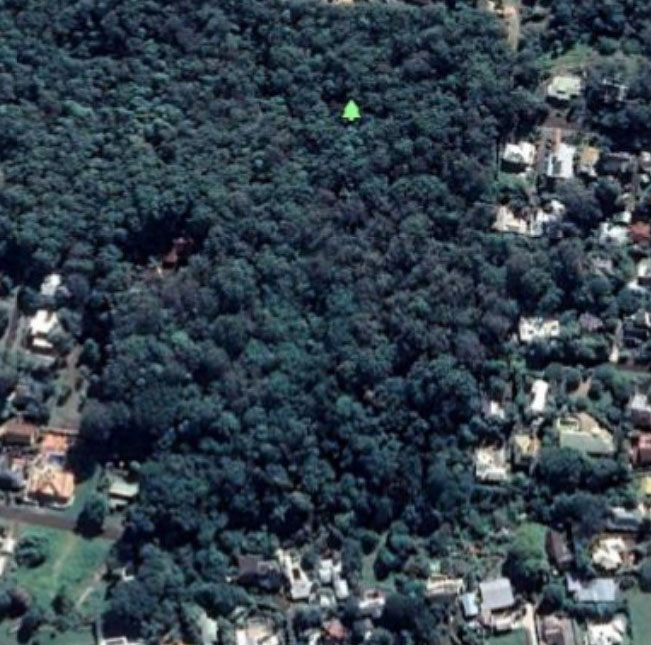
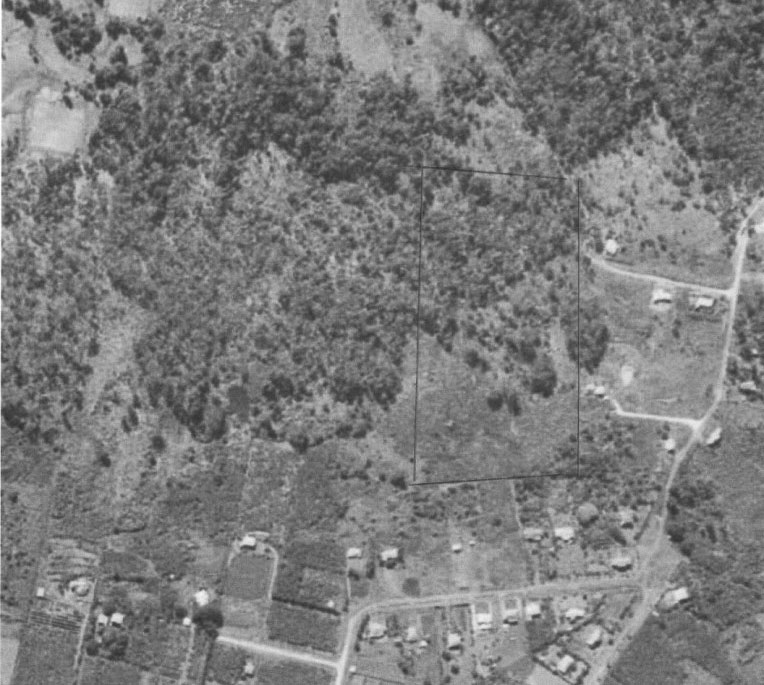
More than a century after the Foote family arrived, the Sanctuary had transformed into a thriving regenerated forest, thanks to decades of dedicated volunteer work.