Native flora within 10km of Foote Sanctuary
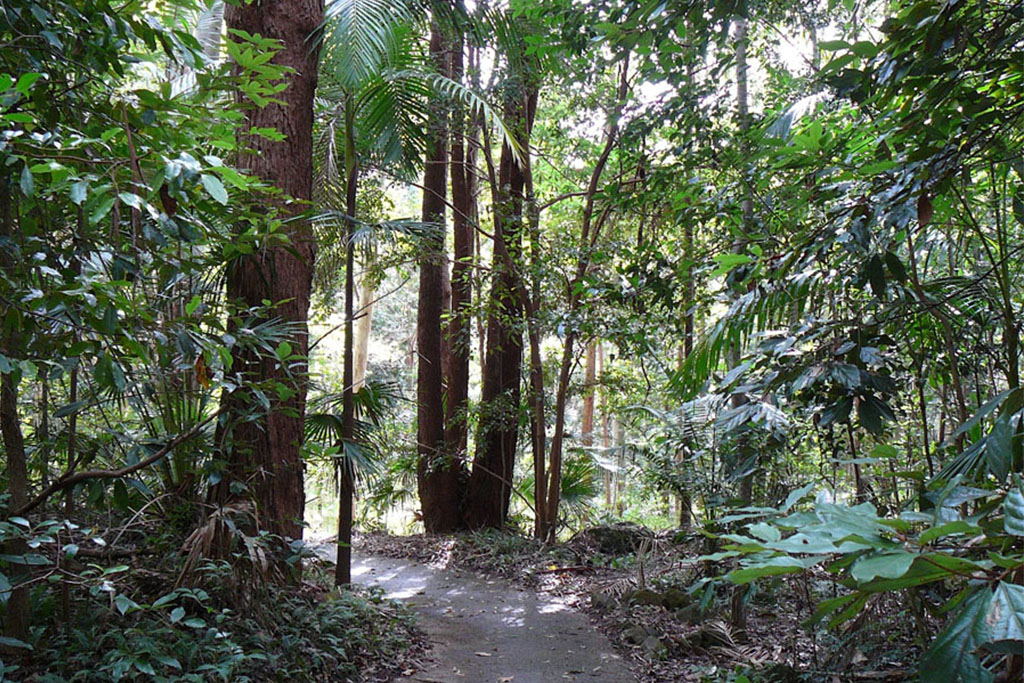
Today, the sanctuary protects more than 270 indigenous flora species, the result of decades of careful regeneration by volunteers. What you see growing here is not accidental. It reflects long-term research into which species originally belonged to this landscape.
Here’s a closer look at the plant communities that define this area.
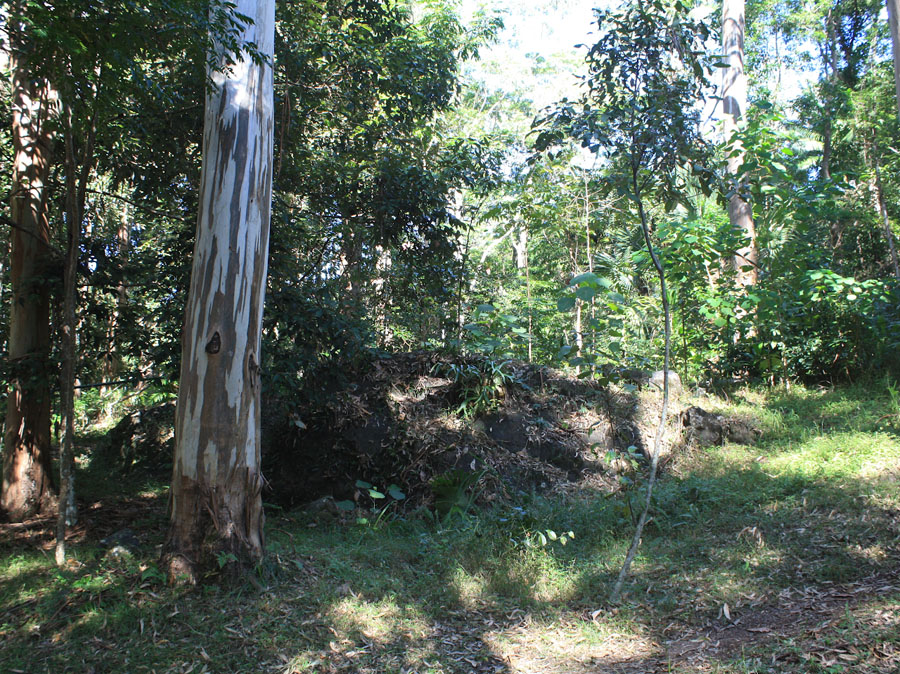
The eucalyptus forest canopy
Eucalypts and related species form the backbone of the upper forest canopy within the 10km radius of the sanctuary.
Some of the most recognisable include:
- Lemon Scented Gum (Corymbia citriodora)
- Spotted Gum (Corymbia maculata)
- Flooded Gum (Eucalyptus grandis)
- Tallowwood (Eucalyptus microcorys)
- Swamp Mahogany (Eucalyptus robusta)
These species provide critical habitat. Their height offers nesting and roosting space, while seasonal flowering supports birds, bees and other pollinators.
The Eucalyptus Track within the sanctuary gives visitors a close look at this woodland environment.
Subtropical rainforest species
Move down the slopes and into the more sheltered areas and you’ll enter subtropical rainforest.
Within the 10km radius, notable native species include:
- Bunya Pine (Araucaria bidwillii)
- Hoop Pine (Araucaria cunninghamii)
- Red Cedar (Toona ciliata)
- Blue Quandong (Elaeocarpus grandis)
- Black Bean (Castanospermum australe)
- Bangalow Palm (Archontophoenix cunninghamiana)
- Silky Oak (Grevillea robusta)
- Macadamia (Macadamia integrifolia)
These rainforest giants create a layered forest structure, with vines, shrubs and ferns thriving beneath them. This structural diversity is what supports such a wide variety of wildlife throughout the sanctuary.
Creek-line and riparian planting
Many species growing naturally along Cornmeal Creek and other drainage lines within the 10km area are specially adapted to wetter soils.
Common creek-side species include:
- Giant Water Gum (Syzygium francisii)
- Creek Satinash (Syzygium australe)
- Foambark (Jagera pseudorhus)
- Tulipwood (Harpullia pendula)
- Brush Box (Lophostemon confertus)
These plants stabilise soil, reduce erosion and improve water quality. Restoration planting along creek corridors is a key strategy in rebuilding resilient ecosystems.
Why local provenance matters
When regeneration began at Foote Sanctuary, parts of the land were overrun with invasive species following logging and farming. Volunteers undertook careful research to determine which trees and shrubs were truly indigenous to Buderim Mountain before replanting.
Planting species native to this specific 10km radius ensures:
- Stronger biodiversity
- Better adaptation to local soils and rainfall
- Support for specialised wildlife
- Long-term ecological resilience
This approach helps recreate the original ecosystems that once covered Buderim Mountain.
A living, evolving forest
What makes Foote Sanctuary unique is that it is both a memorial and an active restoration project. The forest you walk through today is the result of decades of community effort.
Seedlings planted by volunteers in the 1970s now form part of the canopy. Areas once cleared for farming are regenerating into complex rainforest. Each year, continued weed removal and careful planting strengthen the native plant community.
The result is not just a collection of trees. It is a functioning ecosystem that reflects the natural heritage of the wider Sunshine Coast region.
Learn more
For a comprehensive guide to native plants of the Sunshine Coast region, including species suitable for local gardens and restoration projects, visit the Sunshine Coast Council’s native plants resource:
https://www.sunshinecoast.qld.gov.au/environment/trees-plants-and-gardens/native-plants






Join Us in Making a Difference
Explore the beauty of Foote Sanctuary and get involved in our community efforts. Your participation helps preserve our natural heritage and supports local wildlife.